Focus on Risk Minimization, Sportsmanship Continues in NFHS Playing Rules

When it comes to the writing and administration of playing rules for sports competition, the NFHS stands alone at the top. Since the publication of the first Football Rules Book for high school sports in 1932 – almost 100 years ago – the NFHS has been more focused on playing rules than any other national sports organization.
Why? It’s all in the numbers and the educational focus of sports within our nation’s high schools. Now, with more than 8.4 million participants involved in high school sports, NFHS playing rules are written for more individuals than all other levels of sports combined. As a result, risk minimization and the fundamentals of good sportsmanship are paramount to the NFHS rules-writing process and often are the distinguishing factors from rules at other levels of the sport.
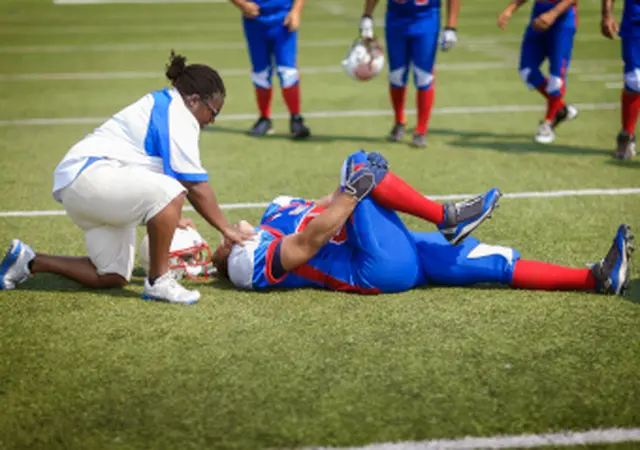
Because of the sheer numbers and contact involved in high school football (more than one million participants), much of the risk minimization focus has been directed historically toward the most popular boys sport. During the past 20 years, no organization has been more focused on the health and safety of participants in this sport than the NFHS.
In 2008, the NFHS Sports Medicine Advisory Committee advocated that a concussed athlete must be removed from play and not allowed to play on the same day. As a result, all NFHS rules publications have contained guidelines for the management of a student exhibiting signs, symptoms or behaviors consistent with a concussion for almost 20 years.
In 2010, the online Concussion in Sports course was developed through the NFHS Learning Center (www.NFHSLearn.com), and more than 10.2 million courses have been taken in the past 16 years.
In 2015, a 24-member Concussion Task Force appointed by the NFHS adopted nine fundamentals for minimizing head impact exposure and concussion risk in football, with the overriding goal of reducing the amount of full contact in practices during the season.
In the past 10 years, more than 20 additional rules changes addressing risk minimization have been approved by the NFHS Football Rules Committee, including targeting, blindside blocks, illegal helmet contact, defenseless players and many more.
And risk minimization and sportsmanship are at the top of the agenda for committees every year in all 18 sports for which the NFHS writes playing rules.
In addition to risk minimization and sportsmanship, the NFHS must also weigh financial implications for schools when considering equipment and uniform changes. With schools ranging in size from less than 100 to more than 5,000 students, decisions must be made for the masses and cannot put undue financial hardships on schools.
NFHS rules are also written with the understanding that appropriate behavior begins with the coach, though everyone has a responsibility to conduct themselves in a respectful manner as an example for student participants.
November is a time of transition and is one of the most exciting times of the year as fall championships continue and winter sports begin. Fall playoff events in football, volleyball, cross country, soccer, field hockey, flag football and other sports bring excitement to communities across the country.
As winter sports begin, NFHS rules committees in basketball, wrestling and ice hockey addressed rules changes ahead of the 2026-27 seasons, and here are some of the key changes and points of emphasis related to risk minimization and sportsmanship.
In basketball, two of the points of emphasis this year are “Uniforms: Education-Based Activities” and “Bench Decorum, Sportsmanship and Professional Conduct.” Regarding uniforms, the message is that “coaches and players share responsibility for ensuring uniforms are worn properly and in full compliance with NFHS rules.” This emphasis is necessary because adherence to proper uniform rules have become lax at other levels of play.
In the sportsmanship emphasis, the message is that “taunting – defined as actions or remarks intended to embarrass, ridicule or demean an opponent – has no place in high school basketball and must be addressed promptly and consistently per NFHS rules.”
Also, high school basketball continues to address the shot clock, which was approved by state adoption for the 2022-23 season. This year, 35 states will use some form of a shot clock, and another four states have approved its use for future years.
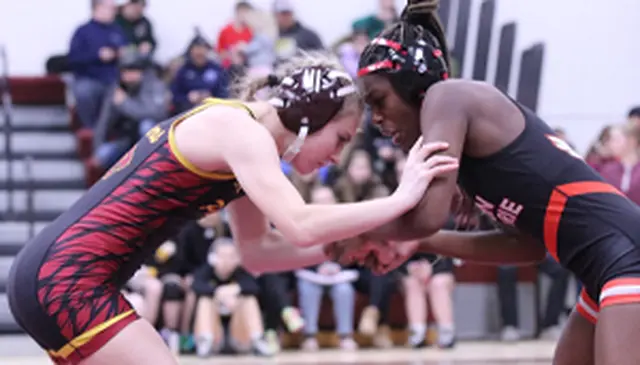
In wrestling, the NFHS has enacted strict weight-management plans the past 25-30 years to address unhealthy practices, and another weight-control plan to establish a healthier process for girls involved in high school wrestling was approved for this year.
In ice hockey, a stronger emphasis on risk minimization regarding goalkeeper equipment was approved. If the goalkeeper’s catching glove or blocker is displaced, play is stopped immediately. Sportsmanship is a key point of emphasis this year in the rules book noting that “taunting opponents or even jumping into the glass near the student section of the opponents has no place in high school hockey.”
Once again, in its 95th year of writing and reviewing playing rules for high school sports, the NFHS continues its devotion to minimizing risk of injury, good sportsmanship and maintaining the sound traditions of the sport.
Republishing Notice: This article may be republished by media outlets. If republished, please credit Davis Whitfield as the author and The NFHS Report as the original source.
Davis Whitfield began his tenure on August 1, 2026, as executive director of the NFHS, the national leader and advocate for high school sports and performing arts programs based in Indianapolis. He was chief operating officer of the NFHS for 11 years prior to his promotion to the executive director position. Prior to joining the NFHS staff in 2015, Whitfield was commissioner of the North Carolina High School Athletic Association (NCHSAA) for five years. He began his career in sports administration in 1995 at Campbell University in Buies Creek, North Carolina, where he was assistant athletic director for operations and facilities for three years. He then served in the athletic department at Wake Forest University in Winston-Salem, North Carolina, including two years as director of operations and facilities management and two years as assistant athletic director for operations and facilities. Prior to joining the NCHSAA staff, Whitfield was on the administrative staff of the Atlantic Coast Conference (ACC) for 7½ years, including the final 2½ years as associate commissioner.
Related Stories